
Choosing a school is one of the most important educational decisions a family can make. In Valencia, there is a wide range of public, semi-private, private, bilingual and international schools, so it is helpful to have clear criteria before starting the search process.
Beyond location, facilities or languages, it is important to consider aspects such as the coherence of the educational project, student support, communication with families, the school’s approach to wellbeing and the way it understands integral development.
Each family has different priorities. Some are looking for a school with a strong academic level. Others place special value on bilingual education, close communication with teachers, smaller groups or a calmer learning environment. There is no single right answer for everyone, but there are criteria that can help families make a more informed decision.
In this article, we review some important aspects to consider before choosing a school in Valencia.
1. A Clear and Coherent Educational Project
The first aspect to analyse is the school’s educational project. It is not enough for a school to use terms such as “bilingual”, “international”, “innovative” or “personalised”. What matters is understanding how these concepts are applied in daily school life.
A coherent educational project should show a clear connection between what the school communicates, what happens in the classroom and the way it supports its students.
Some useful questions are:
• What type of student does the school aim to educate?
• What role do academic, emotional and social development play?
• How does the school balance academic expectations with student support?
• What methodologies are used, and for what purpose?
• How are educational strategies adapted to each school stage?
Pedagogical coherence can be seen when there is continuity between the school’s values, methodology, relationship with families and daily life at the centre.
2. Student Support and Follow-Up
Student support is one of the most important criteria when choosing a school. It is not only about answering academic questions, but about accompanying each student’s learning and development process.
Good follow-up makes it possible to identify strengths, difficulties, changes in attitude, support needs or moments of particular motivation. It also helps guide students more appropriately at each stage.
To assess this point, it is worth asking how individual follow-up is carried out, what role tutors play, how observations are shared with families and what measures are taken when a student needs additional support.
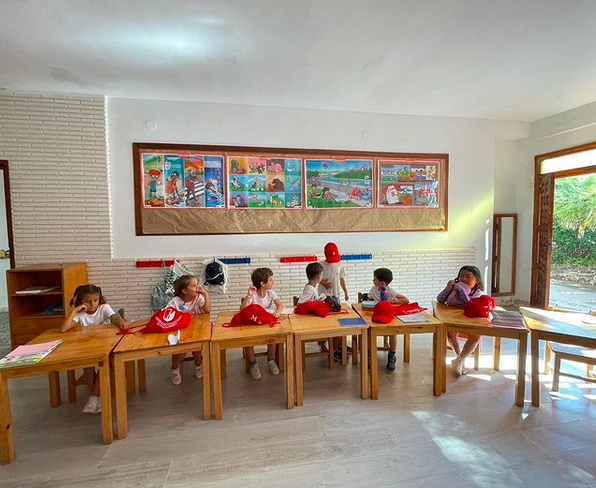
Group size can also have an influence. In smaller groups, it is often easier to observe each student’s progress and maintain closer communication between teachers, students and families.
3. Communication with Families
The relationship between the school and families is a central element of the educational experience. Good communication should not be limited to occasional meetings, compulsory appointments or problematic situations.
A school with strong communication keeps families informed about the student’s progress, listens to their concerns and provides clear channels to resolve doubts.
This does not mean that families should constantly intervene in school life, but rather that there should be a balanced collaboration between the school and the home.
Before choosing a school, it is advisable to ask:
• How are families informed about the student’s progress?
• How often are tutor meetings or family meetings held?
• Which communication channels does the school use?
• How are parents’ questions or concerns handled?
• What role does the family play within the school community?
Close and well-organised communication builds trust and helps support the student more effectively.
4. Bilingualism and International Outlook
Bilingual education is one of the criteria most valued by many families in Valencia. Learning languages, especially English, can open academic and professional opportunities in the future.
However, when evaluating a bilingual school, it is not enough to ask how many hours are taught in another language. It is also important to observe how the language is integrated into school life, what type of linguistic support students receive and how language learning is adapted to each stage.
An international outlook should not be understood merely as a label either. An international approach involves cultural openness, critical thinking, adaptability and preparation to thrive in diverse contexts.
A school with an international vocation should help students understand the world from a broader perspective, while maintaining a connection with their local and cultural environment.
5. Integral Development and Coexistence
A complete education is not limited to academic content. The integral development of the student also includes autonomy, responsibility, creativity, coexistence, emotional development and decision-making skills.
The school’s atmosphere and coexistence among students are essential. Students do not only learn from books or teachers; they also learn from the way they relate to their classmates, resolve conflicts and participate in school life.
For this reason, when visiting a school, it is worth observing the general atmosphere:
• How students interact with one another.
• How adults speak to students.
• How respect is encouraged in the classroom.
• What importance is given to personal responsibility.
• How conflict resolution is supported.
A good school is not one where difficulties never arise, but one that has clear criteria for addressing them in an educational way.
6. Environment and Practical Learning
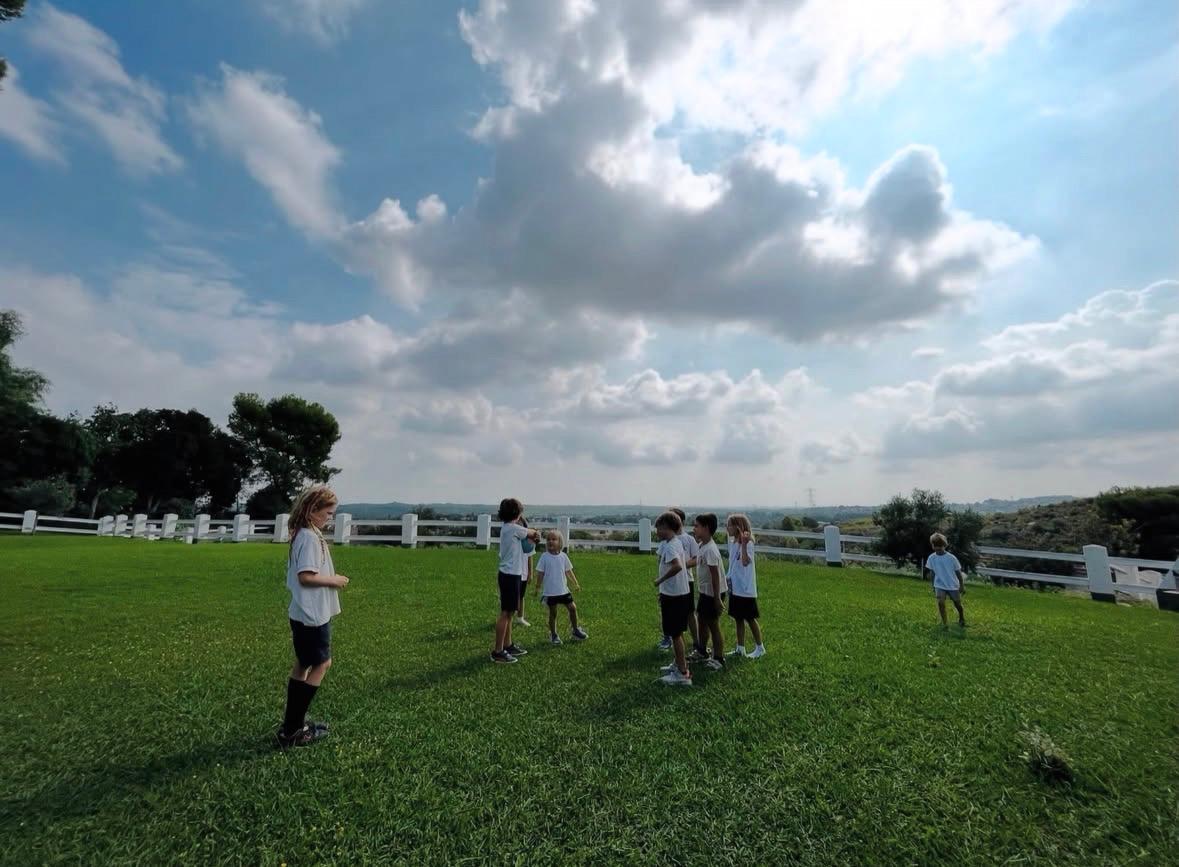
The physical environment is also part of the educational experience. Learning spaces, outdoor areas, contact with nature and practical activities can enrich a student’s development.
Practical learning helps connect content with real experiences. It encourages curiosity, observation, autonomy and responsibility.
It is not simply about having outdoor spaces or complementary activities. What matters is that these resources are part of a clear pedagogical vision.
An environment that is well integrated into the educational project can support a more complete school experience, especially when it combines academic learning, movement, exploration and contact with reality.
7. Continuity Between Educational Stages
Each school stage has different needs. In Early Years, safety, play, socialisation, language and initial autonomy are usually especially important. In Primary, learning habits, basic skills and coexistence become more relevant. In later stages, students need greater responsibility, academic guidance and the development of critical thinking.
For this reason, when choosing a school, it is useful to consider whether there is continuity between educational stages. A coherent project should not function as isolated blocks, but as a progressive journey in which the student can grow with support and structure.
Some useful questions are:
• How is the transition from one stage to another managed?
• What coordination exists between teaching teams?
• How is student adaptation supported?
• What methodological changes are introduced according to age?
• How is communication with families maintained at each stage?
Educational continuity can provide stability and help students move forward with greater confidence.
8. Key Questions for a School Visit
Visiting the school is one of the most important moments in the decision-making process. It allows families to understand the atmosphere of the centre, ask questions and observe aspects that are not always visible on a website.
Some useful questions include:
• How is individual student follow-up carried out?
• What communication exists between the school and families?
• How are new students supported during the adaptation process?
• What role do languages play in daily school life?
• How is coexistence among students encouraged?
• Which methodologies are used, and why?
• How are practical activities integrated into learning?
• What importance does the environment have in the educational experience?
• How are transitions between stages supported?
• What type of student does the school aim to educate?
Beyond the specific answers, it is important to observe how clearly the school explains its project. A school that knows its educational identity well should be able to communicate it in a simple, coherent and transparent way.
Conclusion
Choosing a school in Valencia requires time, observation and thoughtful reflection. The decision should not be based only on proximity, language or facilities, but on the quality of the educational project and the way the school supports its students.
Student support, communication with families, pedagogical coherence, integral development, coexistence and the learning environment are fundamental criteria when assessing whether a school can offer a complete educational experience.
At MDI International College, Colegio María de Icíar, we offer a bilingual and international educational proposal, with small groups, close support and an environment that encourages both academic and personal development.
Our aim is for each family to get to know the project closely, resolve their questions and assess whether our way of understanding education matches what they are looking for for their children.
The doors of our school are open to families who would like to visit us, discover our environment and get closer to our educational community. Families may also ask about the possibility of their children having a trial experience, so they can get to know the school in a more natural way before making a decision.
Are you looking for a school in Valencia?
We invite you to discover MDI International College, Colegio María de Icíar, and learn more about our educational project.
You can request information, schedule a visit or ask about the possibility of your child taking part in a trial day.
We will be happy to welcome you and support you throughout this decision-making process.


Leave A Comment